
Table of Contents
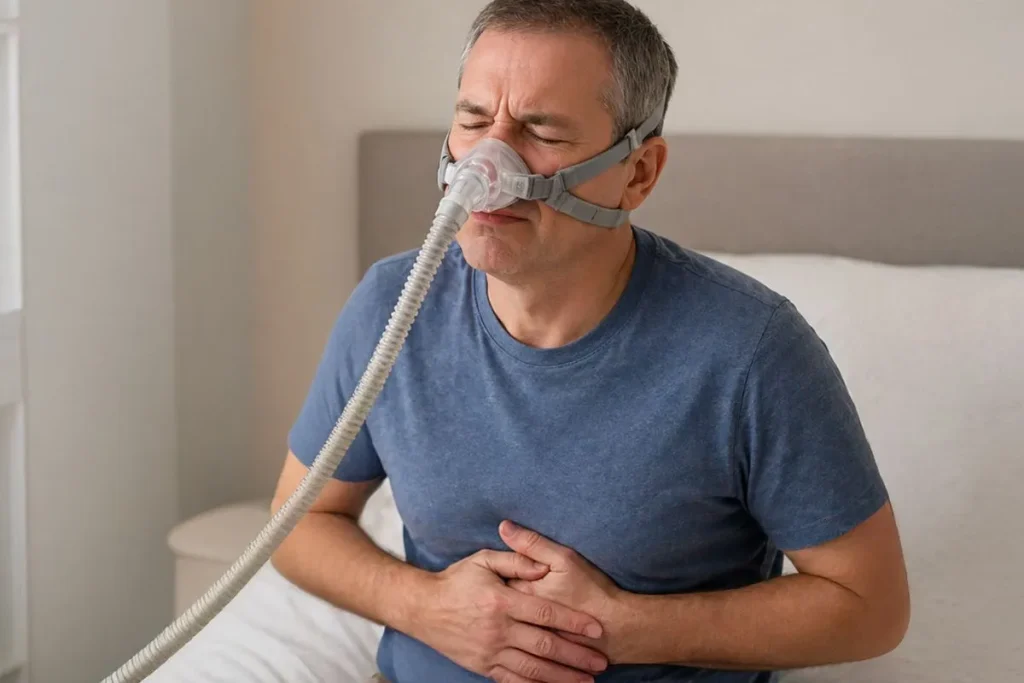
CPAP Machines Cause Stomach Gas Pressurised air from a CPAP machine actually goes into the stomach (rather than the lungs) particularly when you mouth-breathe, gulp air or lie flat on your back. The swallowed air simulates bloating, pressure, burping and lots of farting- mostly the first thing in the night or after several hours associated with usage.
Because the GI tract is relaxed in sleep, the lower esophageal sphincter may not close completely allowing extra air to flow into the stomach which worsens bloating. Aerophagia, is a well-known yet under-discussed side effect that occurs in about 10–16% of patients using.
What Is CPAP Belly / Aerophagia?
Aerophagia, or swallowing too much air which is subsequently retained within the stomach or intestines is known as CPAP belly. The constant stream of pressurised air with CPAP can push air behind the relaxed throat muscles and into the digestive tract, as well as flowing into the lungs.
Typical signs include:
- An abdomen that feels noticeably swollen or tight.
- Increased burping, bloating, or excess gas.
- The mild to moderate pain or pressure in the upper abdomen.
CPAP related aerophagia is a function of trapped air (not acid as in reflux disease, although some people with gastroesophageal reflux disease or a low-functioning lower esophagus together are more susceptible).
AHI tracks how well therapy is working” → what is AHI on CPAP
Does CPAP Cause Bloating and Gas?
There are a number of CPAP related factors that can indeed contribute to increased air swallowing and bloating:
High pressure environments such as fixed-pressure CPAP greater than 12–15 cm H₂O can push additional air into the esophagus.
Mouth breathing or mouth leaks (even with a nasal mask) allow pressurised air leak into the mouth then swallowed.
Inadequate mask fit, use of oronasal masks when only nasal pressure is needed, and inadvertent leaks may increase effective pressure and worsen aerophagia.
Other contributory lifestyle habits include late heavy meals, carbonated drinks, gum-chewing, and lying flat after eating are potential factors as they increase the gastric air and reflux that can be exacerbated with CPAP. One survey of CPAP users suggested that complaints of flatulence and bloating increased substantially after therapy, highlighting that this is an actual, quantifiable adverse effect.
Can a cpap cause gas and bloating? Yes — this is a common form of aerophagia cpap, where air is swallowed under pressurized airflow and trapped in the stomach or intestines, leading to discomfort even though it is usually not dangerous.
What Is the CPAP Bloating Duration?
The lack of a “timeline” is not uncommon with CPAP bloating either, but addressing the cause usually results in symptom relief. Most commonly, individuals experience relief within days to weeks after lowering pressure on their CPAP machine or improving the fit of a mask or sleeping position.
In more chronic cases, transitioning to auto-CPAP or bilevel (BiPAP) therapy has been demonstrated to lessen the aerophagia symptoms with studies showing noticeable resolution within weeks to months. If bloating persists for many weeks despite lifestyle modifications, it is best to return to your sleep specialist or GI doctor and exclude other causes of bloating such as IBS (Irritable bowel syndrome) or functional dyspepsia.
How long does cpap belly last depends on how quickly you adjust pressure, mask fit, and habits, but many people see improvement within days to a few weeks.
Is CPAP-Related Aerophagia Dangerous?
For the great majority of people, CPAP-related aerophagia amounts to discomfort rather than danger. The main risks are:
Decreased CPAP adherence, which can result in untreated sleep apnea and increased long-term cardiovascular risk.
Abdominal swelling is so severe that it may compress the diaphragm, making breathing at night more difficult.
The presence of extreme gas retention can only very rarely result in complications such as gastric distension or even, in susceptible patients and in the absence other medical conditions, pressure-related problems. You should see your doctor urgently if you have chest pain, violent vomiting or sudden and severe abdominal pain as these are not usual symptoms related to CPAP.
Fast Ways to Reduce CPAP Gas and Bloating
A combination of device- and lifestyle-level changes enables most CPAP users to experience a marked decrease in gas and bloating.
cpap belly syndrome treatment essentially focuses on optimising pressure, mask type, and leaks so less air is swallowed, plus addressing reflux and posture during sleep.
Adjust CPAP Settings and Equipment
Collaborate with your sleep specialist to decrease or auto-titrate pressure (common high pressures can be avoided through auto-CPAP and BiPAP so as not to force air into the stomach — index of aerophagia).
Custom mask fit; masks with leaks-particularly when oronasal ventilation adequate via nasal pressure, increase air swallowing.
Use a chin strap or full-face mask if you tend to open your mouth when you sleep, or wear a nasal mask if primarily you breathe through your nose.
Change Sleep Position and Posture
Sleep with mild elevation (30–45 degrees) or on your side via wedge pillow; this is effective in reducing abdominal pressure and air trapping from GERD.
Don’t lie flat on your back for an extended time, especially if you see the worst bloat in that position.
Optimize Diet and Habits
Eat lighter meals in the evening, and stop eating at least 2–3 hours before going to bed so as to lower gastric volume and reflux.
Avoid carbonated drinks, gum-chewing and smoking — all of which introduce swallowed air, leading to excessive bloating.
If you also have IBS-like symptoms, try a low-FODMAP-style reduction (less onions, beans, certain grains, etc.) and possible OTC for gas release.
FAQ's
Can your CPAP make you feel bloated and gassy?
Yes. When the pressurised air travels to the stomach instead of lungs through mouth and throat,
it leads to bloating and gas generation by a condition known as aerophagia (the swallowing of
air). This is more common in mouth b readers, high pressure or poor mask fit.
Can a cpap cause gas and bloating?
Absolutely — this is the classic mechanism behind cpap
belly symptoms such as a swollen or tight abdomen, frequent burping, and increased gas.
What is CPAP belly or aerophagia?
The most common mistakes include using the wrong mask size, skipping cleaning routines, or not replacing filters and tubing regularly. These small issues can reduce both comfort and effectiveness.
Ways to prevent or manage bloating from CPAP?
Pressure, mask fit and habits: work with your clinician to optimise CPAP settings (commonly lower or auto‑CPAP), obtain leak‑free mask fit, avoid mouth breathing leakage‑use chin strap or suitable oral/nasal mask. Also elevate the head of your bed, eat lighter dinners earlier in the evening and reduce bubbles from carbonated drinks as well as bubble gum.
Can a cpap cause gas and bloating?
Yes, and the good news is that most people can reduce or eliminate these symptoms with the right adjustments.
Is CPAP‑related aerophagia dangerous?
In some cases, it caused discomfort to most users but was harmless. The problem being that discomfort can cause people to discontinue CPAP and this raises the complications associated with untreated sleep apnea. Go immediately for urgent care should you possess chest pain, severe vomiting or intense stomach pains that differ from what one might expect to a grotesque gas‑like swelling.
Final Words
Treat Reflux or GERD
If you have heartburn or acid reflux, CPAP can aggravate reflux-associated symptoms and air-deglutition.
Lifestyle measures (such as propping the head high during sleep; avoiding heavy meals within 2–4 hours of sleeping) and medications (proton pump inhibitors [PPIs], H2 blockers) can be discussed with your doctor if symptoms persist.