Table of Contents
Can you have sleep apnea without snoring? Yes, you can. Many people, especially women, those with central sleep apnea, and people who’ve had upper-airway surgery, experience breathing pauses during sleep without loud snoring.
Not every person with sleep apnea snores loudly, which is why the condition often goes undetected for years. Understanding the difference between snoring and sleep apnea can help you recognize warning signs earlier and seek proper treatment.
What “Silent Sleep Apnea” Actually Means
Sleep apnea is a serious sleep disorder in which breathing repeatedly stops and starts. While loud snoring is the most well-known indicator, it is absolutely not a requirement. In fact, sleep apnea without snoring—often referred to as ‘silent sleep apnea’—happens when you experience these dangerous breathing pauses without making a single sound.
Because the usual loud noise is missing, this condition is much harder to spot. Many people mistakenly believe that if they aren’t keeping their partner awake, their sleep is perfectly fine. However, the lack of snoring doesn’t mean your brain and body are getting the oxygen they need. Instead of loud snoring, you might be experiencing the subtle symptoms silent sleep apnea causes, such as waking up exhausted, morning headaches, or brain fog, leaving you completely unaware of the real problem.
However, there is another form of sleep apnea that is more insidious because breathing pauses happen without the dramatic loud snoring noise you normally associate with obstruction. (Oxygen saturation that drops by 20% of the time compared to normal) Up to 20% of people who have sleep apnea may not snore, making it a much more difficult diagnosis and condition.
There are three main types:
Type | Why Snoring May Be Absent |
Obstructive Sleep Apnea (OSA) | Airway blockage can be complete, stopping airflow entirely instead of causing vibration |
Central Sleep Apnea (CSA) | The brain fails to signal breathing muscles; no obstruction = less or no snoring |
Mixed/Complex Sleep Apnea | Combines OSA and CSA; snoring may be minimal depending on the balance of each type |
Having treated hundreds of sleep apnea patients over the last 15 years, we’re surprised not by frequent snorers, but those who don’t snore yet awakens tired every day. And the fact that you often think you’re ok because “no snoring means no sleep apnea” only postpones treatment for a long time.
Why Sleep Apnea Doesn’t Always Cause Snoring
Snoring happens when soft tissues in the airway vibrate as air tries to pass through a narrowed space. Sleep apnea is a condition that occurs when breathing stops or decreases significantly. These are connected but not necessarily the same.
Key reasons snoring may be absent:
- Complete airway blockage: When the airway closes fully, air can’t move enough to create vibration, so snoring disappears.
- Central sleep apnea: No physical blockage means the brain simply isn’t telling the body to breathe, so there’s no snoring sound.
- Upper airway surgery: Tissues that normally vibrate may have been removed, so snoring stops but apnea continues.
- Severe OSA: Some research shows that in very severe cases, the airway stays so closed that snoring reduces instead of increases.
Customers say that they find out about their diagnosis only after a bed partner remarks on pauses in breathing or at a home sleep study showing an elevated apnea-hypopnea index (AHI).
Symptoms Doctors Want You to Watch For (Even Without Snoring)
If you don’t snore but still have sleep apnea, you may notice the symptoms silent sleep apnea can cause, including fatigue, headaches, and brain fog. Snoring is the easiest symptom to spot, but it’s not the only one. If you don’t snore but still have sleep apnea, you may notice:
- Excessive daytime sleepiness or fatigue despite 7–8 hours in bed
- Waking up gasping or choking
- Morning headaches lasting 30 minutes to 4 hours
- Dry mouth or sore throat on waking
- Difficulty concentrating, memory problems, brain fog
- Insomnia or restless sleep
- Mood changes: irritability, anxiety, depression
- High blood pressure
- Nocturia (frequent urination at night)
- Night sweats
- Erectile dysfunction
We tried out various ways of tracking their symptoms with customers, but the folks who maintained a two-week bedtime log—keeping track of things like fatigue levels, headaches and midnight wake-ups—were diagnosed more quickly because they brought hard evidence to their doctor.
Who Is More Likely to Have Sleep Apnea Without Snoring?
Certain groups are more likely to have silent sleep apnea, especially women who report insomnia, anxiety, depression, morning headaches, or night sweats instead of snoring.
Group | Why They’re at Higher Risk |
Women | More likely to report insomnia, anxiety, depression, morning headaches, night sweats instead of snoring |
People with Central Sleep Apnea | CSA is rarely associated with snoring because there’s no airway obstruction |
People with Severe OSA | Complete airway blockage can stop airflow entirely, reducing snoring |
People Who Had Upper Airway Surgery | Vibrating tissues may have been removed, so snoring stops but apnea remains |
People on Opioids / With Neurological Conditions | Opioids and certain conditions increase CSA risk, which typically has little snoring |
General risk factors still apply: older age, menopause, obesity, family history, large tonsils, narrow airway, small lower jaw.
How Sleep Apnea Is Diagnosed (Without Relying on Snoring)
If you want to know how to know if you have sleep apnea, the only reliable way is through a sleep study. Doctors diagnose it using your apnea-hypopnea index (AHI), not by whether you snore. Mild sleep apnea: AHI 5–15
- Moderate sleep apnea: AHI 15–30
- Severe sleep apnea: AHI >30
You can get tested in two ways:
- In-lab polysomnography: Full overnight study with brain waves, oxygen levels, heart rate, breathing, and limb movements
- At-home sleep test: Simpler, measures breathing, oxygen, and heart rate; best when your doctor suspects moderate-to-severe OSA with no other disorders
This is why diagnosis depends on testing, symptoms, and a specialist review rather than sound alone. In our experience, customers who do an at-home test first get results reviewed by a sleep specialist within days and move to treatment much faster than those waiting for a lab appointment.
Treatment Options That Work Even If You Don’t Snore
Treatment focuses on restoring normal breathing, not stopping snoring. The options include:
CPAP Therapy
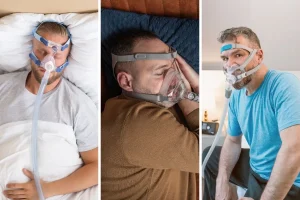
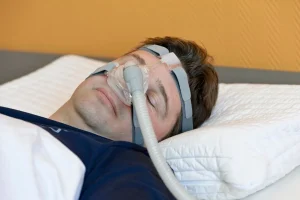
A continuous positive airway pressure prevents the collapse of the airway by means of a fixed air flow. Optimized mask fit and pressure make CPAP the first-line treatment for OSA, and CPAP works effectively.
Oral Appliances
Mouthguards that pull the jaw and tongue forward. These work well for mild-to-moderate OSA.
After a sleep apnea diagnosis, choosing the right therapy is an important next step. Learn the key differences between BiPAP vs CPAP for sleep apnea to better understand your treatment options.
Lifestyle Changes
- Cut out alcohol and sedatives
- Regular exercise (symptoms improve even without weight loss)
- Lose excess weight if present
- Avoid back sleeping
- Treat nasal allergies
Advanced Therapies
- BiPAP: Easier exhalation for some patients
- Upper airway stimulation: Implanted device that moves the tongue forward
- ASV (adaptive servo-ventilation): For central sleep apnea, adjusts pressure to normalize breathing
- Surgery: For physical anomalies like large tonsils, deviated septum, nasal polyps. Follow-up sleep study 2–3 months after surgery is critical because snoring may stop while apnea remains.
FDA-approved medication (Zepbound) is now the first medication treatment for OSA in people with obesity, helping reduce apnea severity.
Common Mistakes People Make (That Delay Diagnosis)
- Assuming no snoring = no sleep apnea. This is the biggest misconception and leads to missed diagnoses.
- Ignoring daytime fatigue. Many people think, “I’m just stressed,” when they actually have untreated apnea.
- Waiting for a bed partner to notice. If you sleep alone, you may never know you snore or stop breathing.
- Self-diagnosing the type. Symptoms overlap; only a sleep study confirms OSA vs. CSA vs. complex.
- Stopping CPAP too soon. If you feel uncomfortable after a few days, most people just need a better mask or pressure adjustment, not to quit.
FAQ's
Can you have sleep apnea without snoring?
Yes. Women are more likely than men to have silent sleep apnea, including insomnia, anxiety, depression, morning headaches, night sweats, and restless sleep instead of the classic loud snoring pattern.
What are the main symptoms of sleep apnea if you don't snore?
The main symptoms can include excessive daytime sleepiness, waking up gasping or choking, morning headaches, dry mouth, difficulty concentrating, memory problems, mood changes, high blood pressure, frequent nighttime urination, night sweats, and insomnia.
Is central sleep apnea less likely to cause snoring?
Yes. Central sleep apnea is caused by the brain failing to send breathing signals, not by a physical airway blockage. Because there’s no obstruction creating vibration, snoring is much less common in central sleep apnea than in obstructive sleep apnea.
How do doctors diagnose sleep apnea if there's no snoring?
Doctors diagnose sleep apnea using a sleep study that measures breathing, oxygen levels, heart rate, and brain activity. The diagnosis is based on your apnea-hypopnea index (AHI), not on whether you snore. You can do an in-lab polysomnography or an at-home sleep test depending on your doctor’s recommendation.
Can thin people have sleep apnea without snoring?
Yes. Thin people can have sleep apnea without snoring. Obesity is a major risk factor, but other factors like neck circumference, jaw structure, family history, and neurological conditions can also cause sleep apnea, including central sleep apnea, which often has no snoring.
Is silent sleep apnea harder to treat than regular sleep apnea?
No. The treatment options for silent sleep apnea are the same as for sleep apnea with snoring: CPAP therapy, oral appliances, lifestyle changes, surgery, and advanced therapies. Silent sleep apnea is harder to diagnose, which can delay treatment, but once diagnosed, it responds to the same treatments.
Can women have sleep apnea without snoring?
Yes. Women are more likely than men to have sleep apnea without loud snoring. Women often present with symptoms like insomnia, anxiety, depression, morning headaches, night sweats, and restless sleep instead of the classic loud snoring pattern seen in men.
What should I do if I suspect sleep apnea but don't snore?
If you suspect sleep apnea but don’t snore, track your symptoms for 2 weeks, note fatigue, headaches, nighttime awakenings, and mood changes, then schedule an appointment with your doctor. Ask for a sleep study, either in-lab or at-home.
Shop Related Products
If you’re experiencing symptoms of sleep apnea, you have options:
- At-home sleep apnea test: Confirm your sleep apnea type from the comfort of your bed, no lab visit required
- CPAP machines and masks: Get properly fitted CPAP equipment from trusted brands, with guidance from sleep specialists
- Oral appliances and accessories: Explore alternative treatments and comfort products for better therapy adherence
Visit cpaprx.com to order a trusted CPAP device , take an at-home sleep apnea test, or consult with our sleep specialists for personalized therapy support. We’ve helped people manage sleep apnea for over 15 years, and we’re here to guide you every step of the way.
Resources & Further Reading
Medical & Health Sources
Sleep & CPAP-Specific Sources