Table of Contents
If you’re wondering can i use resmed cpap without water, the short answer is yes, but comfort can change. This guide explains what happens, when it is okay, and how to stay comfortable if you prefer running your machine dry.
Not sure if you have sleep apnea? Explore the common symptoms and warning signs in our Sleep Apnea: 7 Warning Signs & Your Type guide.
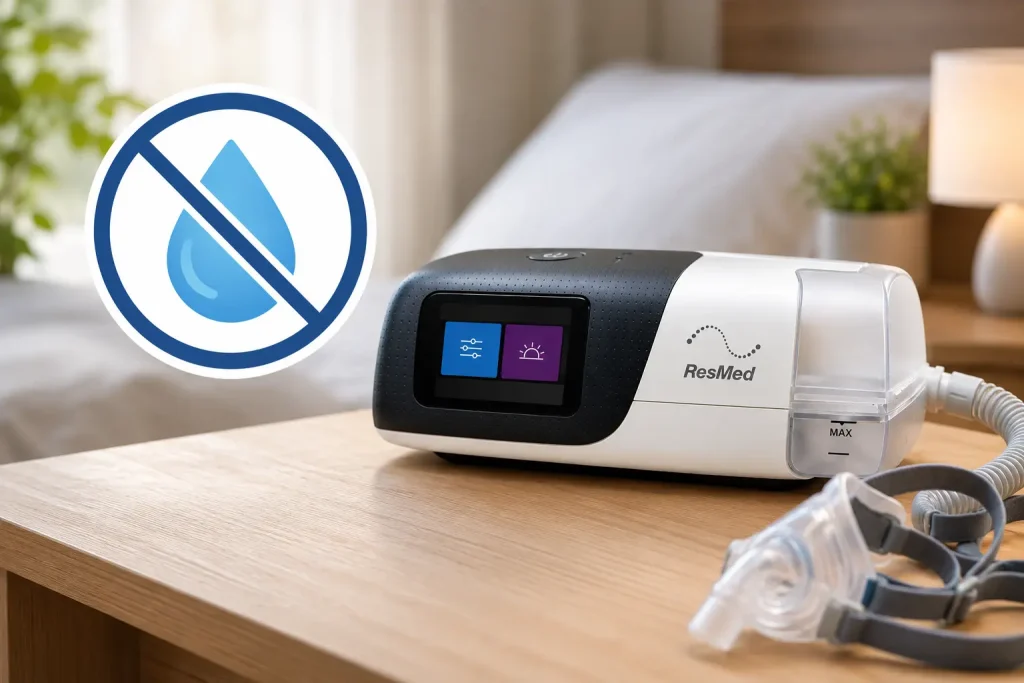
A ResMed machine still delivers continuous air pressure if the humidifier is empty or turned off; the water chamber is only there to add moisture, not to create the therapy. What changes is the temperature and humidity of the air entering your nose or mouth.
- If the humidifier is off or the tank is empty, you get cool, dry air instead of warmed, moist air.
- In dry or cold rooms, this can make your nasal passages, throat, and mouth feel drier and more irritated.
- Some people find this more comfortable, especially if they sleep hot or dislike the “steamy” feeling; others notice more dry mouth, congestion, or nosebleeds.
ResMed’s own guidance says the machine functions safely without water, but humidification is there to improve comfort and reduce side effects.
What Happens Without Water
A ResMed CPAP still works when the humidifier tank is empty. The machine continues to deliver air pressure, but the air feels drier and less comfortable for many people. That is why can i use resmed cpap without water is such a common comfort question.
When It May Be Fine
Some users choose to skip water during travel or in humid weather. Others do it because they dislike warm air or want a simpler setup. In our experience, dryness is the main reason people ask can i use resmed cpap without water.
Why Humidification Matters
- Winter or desert‑style dry heat environments make nasal and throat dryness more likely.
- You already struggle with dry mouth, nasal congestion, or sinus irritation during CPAP.
- You’re using a full‑face mask or sleep with your mouth open, which increases the volume of air hitting your oral tissues.
In our experience, people who run their ResMed machines without water for too long often notice more throat soreness, mid‑night wake‑ups to drink water, or a gradual dislike of the therapy, which can reduce long‑term use.
Benefits of using a ResMed CPAP without water
- Simpler setup and travel
- You don’t need to pack distilled water or refill a tank daily.
- Some users install a bypass adapter or side cover instead of the humidifier chamber, which cuts down the “bulk” of the device.
- Fewer humidity‑related issues
- Less risk of condensation (“rainout”) in the tube, which can drip onto your face or bed.
- If you run the machine with a cooler room temperature, dry air can feel more refreshing and less “sticky.”
- Fewer cleaning steps
- An empty or removed humidifier chamber means one less part to rinse, dry, and store daily.
That said, most of these benefits are convenience‑level wins, while the comfort and side‑effect benefits of humidity are usually more meaningful for long‑term adherence.
Risks and side effects of skipping water
- Dry nasal passages and throat
- Studies and clinical reports show that dry air from CPAP can dry out nasal and oral mucosa, leading to stuffiness, soreness, and a scratchy throat.
- In one analysis, about 40% of CPAP users report dry mouth, which is strongly linked to low humidity and dry environments.
- More nosebleeds and irritation
- Continuous dry air can crack the delicate lining inside the nose, especially in dry climates or during winter months.
- Some users on Reddit and patient forums describe needing petroleum‑based nasal gels or saline sprays more often when they disable humidification.
- Increased mouth breathing and dry mouth
- If the air feels too dry, people may unconsciously open their mouth more, which worsens dry mouth and can undo some of the benefits of proper nasal breathing.
- Severe dry mouth can also contribute to bad breath, difficulty swallowing, and oral discomfort on waking.
- Reduced therapy comfort (and adherence)
- Discomfort is one of the main reasons people cut back on CPAP use or stop altogether.
- If you’re consistently waking up with a raw throat or dry nose, your brain may start to associate CPAP with discomfort, which can quietly lower your long‑term adherence.
When to keep the water chamber active
Doctors and sleep specialists generally recommend using the humidifier if any of the following apply:
- You live in a dry or cold climate (Arizona‑style winters, desert regions, heated rooms).
- You say you feel dry mouth, nasal congestion, or sinus irritation when you use CPAP.
- You wake up with frequent nosebleeds or a sore throat.
- Your room temperature is low (often true in winter with AC or central heating).
In practice, that covers a lot of users. The goal isn’t to “force” humidity; it’s to use it when your body signals that the air is too dry.
How to run your ResMed CPAP without water (properly)
If you decide to try a night or two without water, do it the right way:
- Turn off the heated humidifier
- In your machine’s settings (e.g., “My Options” on AirSense‑style devices), set humidity level to 0 instead of just leaving the tank dry.
- This stops the heater plate from running without water, which can prolong the life of the humidifier components.
- Use the tank empty, or remove it if your device allows
- Some ResMed models let you remove the chamber and install a side cover / bypass adapter.
- If you remove the tank, keep it clean and handy in case you decide later that you do need humidification.
- Adjust your environment
- If you’re skipping water, aim for a slightly warmer room (around 20–22°C) and avoid blasting cold air from fans or AC directly at your face.
- A light layer of bedding or a blanket over your chest can help reflect some warmth back toward your face without making you overheat.
- Hydrate well before bed
- Drinking water in the evening and keeping a glass by the bed can help counteract the drying effect of un‑humidified air.
How to balance comfort if you dislike water
Some people dislike the “wet” feeling or find humidity too warm, but don’t want to suffer dryness. Here’s how to tweak things:
- Use a lower humidity setting instead of “0” or “off”
- On many ResMed machines, level 4 is the default; try 2–3 to reduce condensation and the “warm” sensation while still cutting dryness.
- Use a heated tube (if available)
- On newer Air Solutions‑style devices, heated tubing helps keep the air warm and reduces rainout, so you can run modest humidity without water dripping into the tube.
- Try a chin‑strap or mask‑fit tweak
- If you’re mouth‑breathing, a chin‑strap or a better‑fitting mask can reduce how much air hits your mouth, lowering the chance of dry mouth even with lower humidity.
When to talk to your clinician
It’s worth talking to a sleep clinician or ENT if:
- You’re regularly waking up with nosebleeds, severe sore throat, or sinus pain despite using humidity.
- You’re thinking about permanently disabling the humidifier but you live in a very dry climate.
- You’ve had ongoing nasal congestion or sinus issues that might need a different mask type, pressure setting, or medical review.
Research shows that dry mouth and nasal irritation are common but manageable side effects, not a reason to quit CPAP—and humidification is one of the most effective tools to reduce them.
FAQ's
Can I use a ResMed CPAP safely without water in the humidifier?
Yes, a ResMed CPAP can run safely without water in the tank; the therapy still delivers the correct pressure, but the air will be cooler and drier. The humidifier is there to add comfort, not to produce the therapy itself, so skipping water is physically safe but can increase dryness and irritation, especially in dry or cold rooms.
Does running a CPAP without water damage the machine?
In most ResMed models, running the machine without water does not damage it as long as you turn the heated humidifier off or set humidity to 0. If the heater plate runs without water for long periods, it may wear out faster or trigger error messages, so experts recommend adjusting the setting rather than just leaving the tank empty indefinitely.
What happens if the water runs out overnight?
If the water runs out, your machine will still function normally, but humidification stops once the tank is empty. You may notice the air becoming drier during the remainder of the night, which can lead to more nasal or throat dryness and a slightly more uncomfortable experience. In practice, it’s okay as an occasional event, but refilling before bed is better for consistent comfort.
Is it better to use a ResMed CPAP with or without water?
For most people, using the humidifier with water is better for comfort and to reduce dry mouth, nasal irritation, and nosebleeds. Some users in warm, humid climates or who dislike warm air may prefer to run the machine dry or with very low humidity, but this often comes at the cost of more dry‑air symptoms.
Can you travel with a ResMed CPAP without the water chamber?
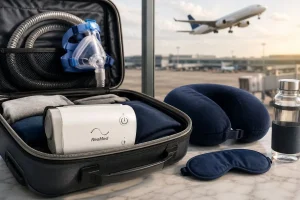
Yes, many ResMed machines can be used without the water chamber or with a bypass adapter, which makes the device lighter and easier to pack. Travel regulations also suggest removing the humidifier and keeping it empty or detached when flying to avoid water leaks or damage inside the machine.
Does using a CPAP without water cause dry mouth?
Running a CPAP without water can make dry mouth more likely, especially if you sleep with your mouth open or live in a dry climate. Studies show that dry‑mouth symptoms are common in CPAP users and are often linked to low humidity, so adding moisture via the humidifier usually reduces this side effect.
Should I always use distilled water if I choose to humidify?
Running a CPAP without water can make dry mouth more likely, especially if you sleep with your mouth open or live in a dry climate. Studies show that dry‑mouth symptoms are common in CPAP users and are often linked to low humidity, so adding moisture via the humidifier usually reduces this side effect.
Shop Related Products
If you’d like to make running your ResMed CPAP more comfortable, these kinds of products can help:
- Waterless humidification accessories (e.g., disposable humidifying inserts or bypass adapters for certain models) to simplify travel.
- Nasal gels or saline sprays designed for CPAP users to soothe dry nasal passages.
- Chin‑straps or mask‑fit accessories that reduce mouth‑breathing and dry mouth.
You can explore these and related sleep‑apnea products on your usual CPAP supply site.